

 Česky (CZK)
 Slovensky (EUR)
 Magyar (HUF)
 Deutsch (EUR)
 Deutsch (EUR)
 Polski (PLN)
 Română (RON)
 Español (EUR)
 Français (EUR)
 Dutch (EUR)


Legends of Pearls
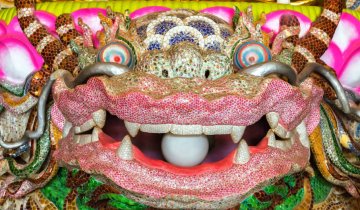
Pearls are among humanity's oldest treasures. Long before science explained how they form, people all over the world told stories about their birth – from drops of dew, the tears of gods, moonlight or the power of dragons. These legends still shape what pearls symbolise today: purity, love, wisdom and protection.
In short
In India, pearls are linked to the Moon and to Krishna, who gave the first pearl to his daughter on her wedding day. The Persians believed pearls were born where a rainbow touches the earth after a storm, the Chinese associated them with dragons and gratitude, and the Polynesians with the god Oro and the black pearl. Across cultures, pearls symbolise purity, love, fidelity and wisdom – which is why they remain a much-loved gift for weddings, anniversaries and the birth of a child.
In this guide: Krishna and Venus, rainbows and raindrops, the dragon and the glowing pearl, the grateful snake, black and white pearls, elixir of youth, legends at a glance, frequently asked questions.
The birth of pearls – from Krishna to Venus
In Hindu culture, pearls are linked to the Moon and regarded as a symbol of purity and love. Their soft, cool lustre reminded people of moonlight, so it was believed that a pearl carries the Moon's calm, protective power within it. According to an ancient legend, the god Krishna descended into the depths of the ocean, where he found the first pearl. He gave it to his daughter on her wedding day – as a wish for a happy and faithful marriage. Ever since, pearls have been a talisman of love and a guardian of marital happiness, and they remain one of the most popular choices of bridal jewellery.
The ancient Greeks and Romans believed that wearing pearls strengthens harmony between partners, and the union of the souls of Psyche and Cupid was depicted as a string of pearls. The Romans saw pearls not only as a symbol of wisdom and wealth, but also as a key to happiness. Ladies slept wearing pearl necklaces to invite beautiful dreams. According to ancient tales, Venus (the Greek Aphrodite), goddess of love, was born from the sea foam and carried ashore by a seashell – just like the pearl, which people then believed was born inside a shell from a drop of sea dew. This is why pearls in antiquity were dedicated to the goddess of love and beauty.
Pearls as a gift of love: You can carry on the tradition of wedding pearls today. Find inspiration in our article Wear pearl jewellery on your wedding day, and matching necklaces and earrings in Pearl sets →
Pearls from rainbows, raindrops and moonlight
According to a Persian legend, pearls are born after a storm, where a rainbow touches the earth. The tiny irregularities and spots on a pearl's surface were said to be caused by the thunder and lightning that came before the rainbow. In Persia it was also said that pearls form from drops of spring rain falling into an open pearl oyster.
Ancient scholars recorded a similar belief, among them Pliny the Elder: shells were thought to open at night, take in drops of rain or dew, and turn them into pearls. The purer the dew, the more beautiful the pearl. Other stories tell of shells rising to the surface at full moon, with pearls born from the meeting of the sea and moonlight – which is why many cultures called pearls "little moons".
The legend of the dragon and the glowing pearl
In Chinese mythology, the pearl is considered a gift from heaven. According to an old tale, it is guarded by a mighty dragon who holds it between its teeth as a source of strength, wisdom and light. When a storm rages in the sky, it is said that pearls fall from the clouds like drops lost by fighting dragons. This is why the pearl in Chinese art is often shown as a glowing sphere in the dragon's mouth or beneath its chin – a symbol of knowledge, prosperity and inner energy. The motif of a dragon chasing the "flaming pearl" can still be seen today on temples, porcelain and at New Year celebrations.
The tale of the grateful snake
One of the lesser-known Chinese legends tells of a ruler who saved a wounded snake. In the best-known version, he is the Marquis of Sui, who found a badly injured snake on his travels and dressed its wound. A year later, the snake returned and brought him a radiant pearl as a sign of gratitude. The pearl is said to have shone so brightly that it lit up an entire room at night, which is why it was called the "moonlight pearl". Known as the Marquis of Sui's pearl, it became one of the most famous treasures of ancient China, and the story is among the oldest known tales of an animal repaying a kindness to a human. Since then, people have believed that pearls connect the worlds of people and nature, and that true kindness always comes back – often in the form of an unexpected gift.
Legends of black and white pearls
An old Polynesian legend also tells of pearls and love. Oro, the god of peace and fertility, descended from the sky on a rainbow and brought people a magical pearl oyster. On the island of Bora Bora he fell in love with a beautiful princess and offered her the black pearl from the oyster as proof of his love. Since then, black pearls have been a symbol of deep feeling and fidelity. Tahitian pearls, still cultured in French Polynesia today, are considered a gift of the gods thanks to this legend. Explore our Tahitian pearl jewellery.
In other cultures, the birth of pearls was linked to tears. Ancient stories called them the tears of the gods, while in Ceylon it was said that the tears of Adam and Eve formed a lake from which pearls arose – white and pink from Eve's tears and black from Adam's. Because men cry less often, black pearls are rarer according to the legend. The black pearl became a symbol of the exceptional and the rare, and is called the "queen of pearls". Its real colours are explained in our article Are black pearls really black?
Curious how real pearls are graded? Tahitian pearls have their own A–D scale, while freshwater and Akoya pearls use the AAA–A scale. Pearl quality evaluation →
Pearls as an elixir of youth and wisdom
In many countries, pearls were credited with miraculous powers. Mongol rulers drank a brew of crushed pearls, believing it would boost their strength and vitality. In India, pearls served as a talisman protecting warriors from wounds. The Chinese made a healing drink from pearls and believed that black pearls hold the wisdom of the universe. According to them, black pearls were created by a dragon who held them tightly between its teeth until a human defeated it. The Japanese, in turn, claimed that pearls are born from the tears of mythical beings – mermaids, fairies and angels. The Egyptians valued their pearls so highly that they were buried with them, and Queen Cleopatra, according to the Roman scholar Pliny the Elder, wagered Mark Antony that she could host the most expensive banquet in history. She is said to have dissolved a pearl in a cup of vinegar to prove she could swallow the wealth of the whole world in a single sip.
Pearl legends at a glance
| Culture | Where pearls come from | What they symbolise |
|---|---|---|
| India | Krishna found the first pearl in the depths of the ocean | Purity, love, a happy marriage |
| Greece and Rome | A drop of sea dew in a shell, the tears of gods | Love, harmony, wisdom, wealth |
| Persia | A rainbow touching the earth after a storm, drops of spring rain | Hope and beauty after hard times |
| China | The dragon's pearl, a gift from a grateful snake | Wisdom, prosperity, gratitude |
| Polynesia | A gift from the god Oro to the princess of Bora Bora | Deep feeling and fidelity |
| Ceylon | A lake formed from the tears of Adam and Eve | Rarity and exceptionality |
| Japan | Tears of mermaids, fairies and angels | Purity and protection |
Frequently asked questions
What do pearls symbolise?
Across cultures, pearls are a symbol of purity, love, fidelity and wisdom. In India and Greece they were associated with love and marriage, in China with wisdom and prosperity, and in Polynesia with deep feeling.
Why are pearls linked to the Moon?
Their soft, cool lustre reminded people of moonlight. Old stories also tell of shells rising to the surface at full moon and pearls being born from moonlight, which is why they were called "little moons".
Are pearls bad luck at a wedding?
This is an old superstition based on the idea that pearls resemble tears. The opposite tradition, however, is far older and more widespread: according to Hindu legend, Krishna gave the first pearl to his daughter on her wedding day as a wish for a happy marriage. That is why pearls are among the most popular bridal jewellery, see Wear pearl jewellery on your wedding day. The pearl anniversary also marks 30 years of marriage, more in our article Pearl wedding anniversary.
What legend is connected with the black pearl?
According to Polynesian legend, the god Oro descended to earth on a rainbow and gave the black pearl to the princess of Bora Bora as proof of his love. In Ceylon, on the other hand, it was said that black pearls came from Adam's tears. To learn about the real origin of black pearls, read our article Tahitian pearls.
Did Cleopatra really dissolve a pearl in vinegar?
The story was recorded by the Roman scholar Pliny the Elder. Vinegar does attack nacre, as it is made mostly of calcium carbonate, but an instant dissolution of a whole pearl is unlikely. Historians therefore see the story more as a legend about lavish wealth.
How are pearls really formed?
A pearl forms inside a mollusc, which gradually deposits layers of nacre around a foreign body. Today, almost all pearls on the market are cultured – they form through the same natural process, but it is started by a person at the beginning. Our article How cultured pearls are formed explains it in detail.
Which month does the pearl belong to?
The pearl is the traditional birthstone for June. It makes an ideal gift for a June birthday, but thanks to its symbolism it is also perfect for a wedding anniversary, a graduation or the birth of a child.
Keep reading
More guides and certified jewellery.
Need advice? Customer service
Orders received by 12:00 noon will be shipped the same day.
Choose pearl jewellery from our collection
Pearl earrings
|
Pearl sets
|
Pearl bracelets
|
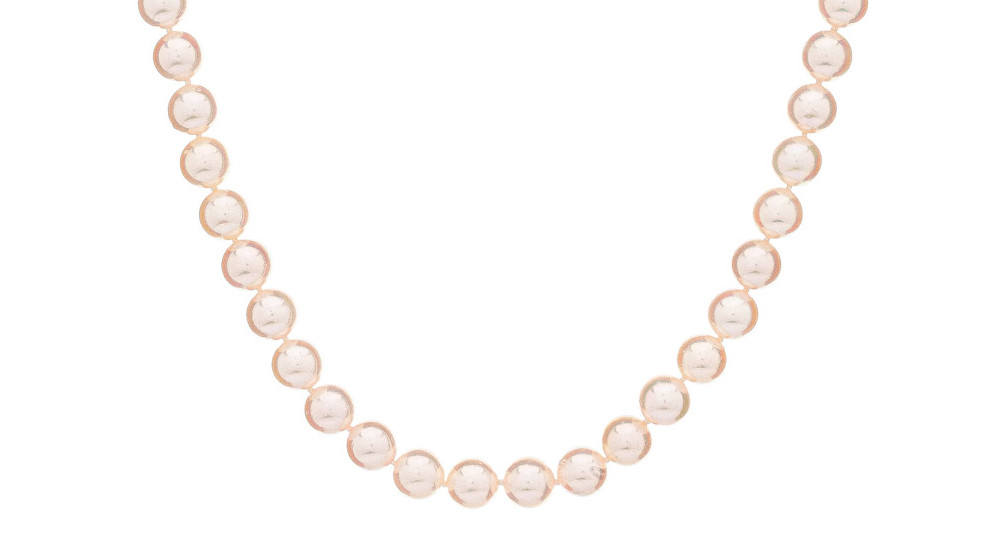
Pearl necklaces
|
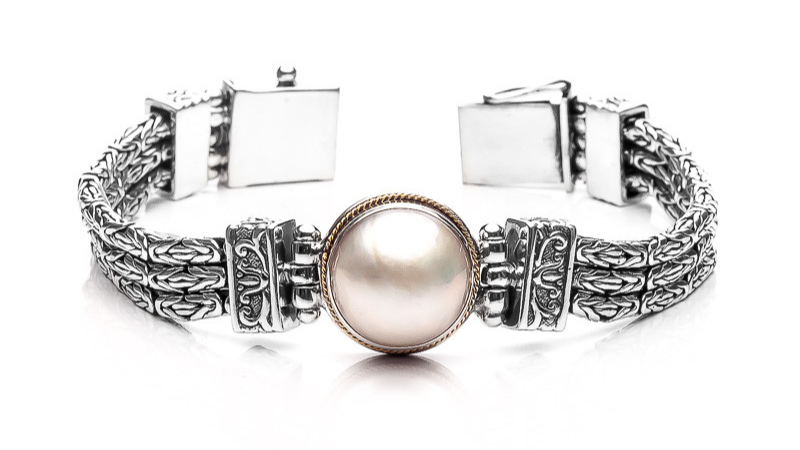
Luxury jewellery
|
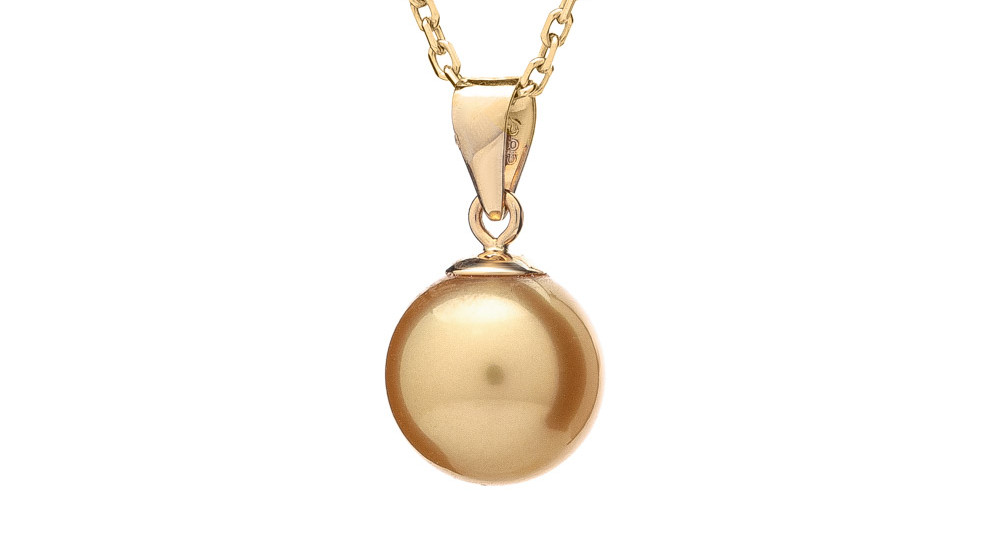
Pearl pendants
|
This guide was prepared and verified by the Buka Jewelry pearl specialist team, based on our experience since 2013. Last updated: October 2026.
How We See Pearls Today
Today, pearls are symbols of beauty, elegance, and emotional harmony. They are said to calm emotions, bring inner balance, and help the wearer see themselves more clearly. Associated with purity and innocence, pearls are believed to protect the gentle and the young. A pearl necklace remains a timeless piece of jewelry – carrying thousands of years of history, love, and wisdom.
The Buka Jewelry collection features genuine pearls from around the world – from delicate freshwater pearls to rare Tahiti pearls. Each piece is crafted with respect for tradition and inspired by the timeless legends that have accompanied pearls for millennia.
Explore Our Pearl Jewelry Collection
| |
Pearl Earrings | |
Pearl Sets | |
Pearl Bracelets |
| |
Pearl Necklaces | |
Luxury Jewelry | |
Pearl Pendants |

